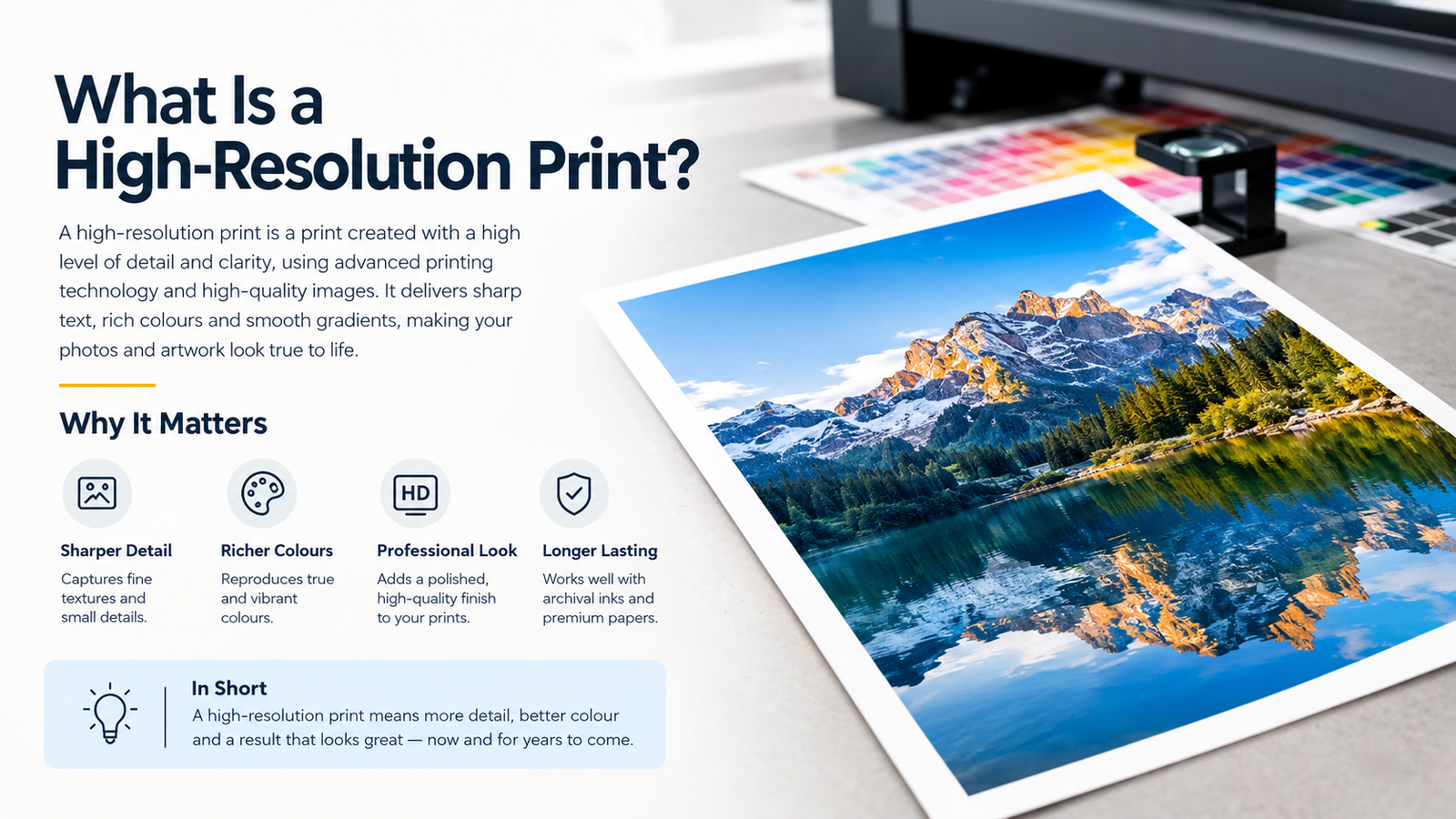


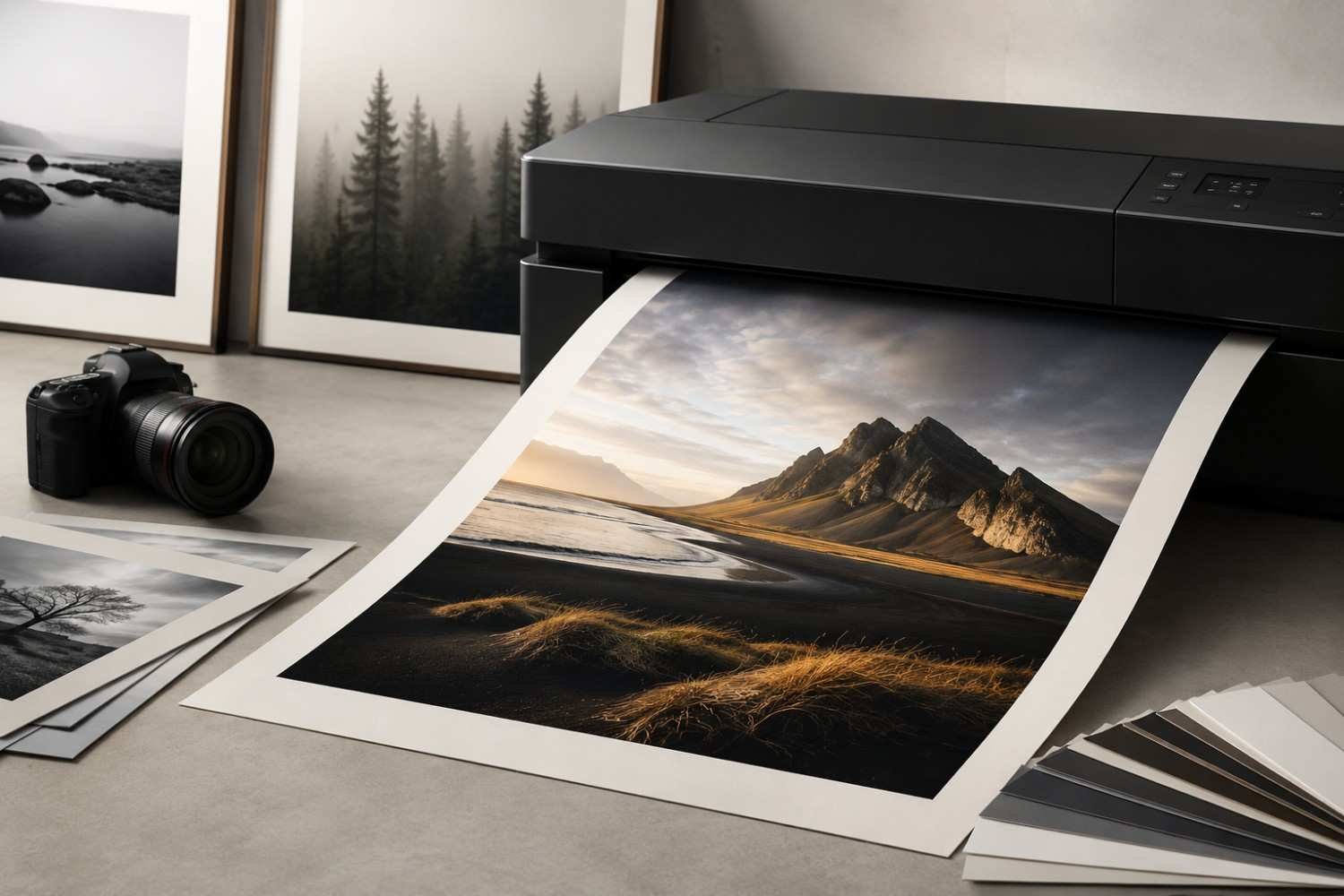
Imagine holding a photograph 30 years from now and finding it just as vivid, warm, and detailed as the day it was printed. That is not a dream. That is the promise of Epson Pigment Archival Prints, a premium solution widely used in archival printing and fine art printing for long-term image preservation.
The Problem with Prints That Do Not Last
Every artist, photographer, and collector carries the same quiet fear: that their most meaningful work will fade. A wedding portrait yellowing at the edges. A landscape losing its depth. A fine art reproduction turning dull before it ever finds its forever frame.
Colour degradation, image fading, and paper yellowing are not rare. They are the natural result of using the wrong printing method. And for anyone serious about preserving visual work, the choice of ink and paper matters enormously. This is why professional archival printing services have become essential for photographers and artists who value longevity.
What Makes Epson Pigment Archival Prints Different?
Epson Pigment Archival Prints are produced using pigment-based inks, which are fundamentally different from conventional dye-based inks.
Dye inks dissolve completely into paper fibres. They can produce bright, vivid colours, but they are vulnerable. Light, humidity, and airborne pollutants gradually break them down, leading to noticeable colour shift and fading within a couple of years.
Pigment inks work differently. They contain microscopic solid particles that sit on the paper surface and bond with it, forming a stable, protective layer. This structure makes them significantly more resistant to UV light exposure, moisture, and environmental changes.
The result is a print with outstanding colour stability, faithful tonal range, and remarkable longevity. Independent testing by institutions such as Wilhelm Imaging Research has shown that high-quality pigment prints, under proper display conditions, can last well over 100 years without significant colour loss.
This is one reason Epson Pigment Archival Prints are widely regarded as the benchmark for museum-quality prints, gallery prints, and professional fine art printing applications.
The Role of Archival Paper in Print Longevity
Ink quality alone does not determine how long a print survives. The substrate beneath it is equally critical. Archival-grade papers are acid-free and lignin-free. Acid is the enemy of paper. Over time, acidic materials break down, causing yellowing, brittleness, and deterioration. Lignin, a natural compound found in wood pulp, accelerates this process. Removing both ensures the paper itself does not undermine the image above it.
Fine art cotton rag papers are among the most respected archival substrates available. They offer excellent dimensional stability, beautiful texture, and superior colour reproduction. Paired with Epson Pigment Archival Prints, cotton papers create a final product built for long-term preservation, whether displayed on gallery walls or stored flat in archival sleeves.
For premium archival printing, the combination of pigment inks and cotton rag paper remains one of the most trusted solutions available today.
Who Benefits from Epson Pigment Archival Prints?
The applications are broad. Professional photographers use Epson Pigment Archival Prints and archival pigment printing to deliver heirloom-quality prints for weddings, portraits, and fine art collections. These are images meant to outlast the moment they capture.
Artists reproducing paintings, illustrations, or digital artworks rely on pigment-based fine art printing to achieve colour accuracy across editions, maintaining consistency from the first giclée print to the last.
Collectors and galleries prioritise archival standards because the value of a limited-edition print is tied directly to its physical integrity over time. Even families preserving personal memories, milestone photographs, or generational records benefit from prints that will not deteriorate on a shelf or inside a frame.
In every case, the underlying principle is the same: the image deserves to last as long as the memory it holds.
Pigment Printing Versus Dye Printing: A Clear Distinction
For casual, everyday printing, dye-based methods remain practical. They are cost-effective, fast, and produce acceptable results for short-term use.
But for fine art reproduction, professional photography, limited editions, gallery display, collectible prints, and archival printing, Epson Pigment Archival Prints are the gold standard. The difference is not subtle. It is the difference between a photograph that fades in a decade and one that endures for generations.
Colour management is also more precise with pigment systems. Professional printers calibrate their workflows carefully to ensure that what appears on screen translates faithfully onto paper, maintaining accurate skin tones, deep blacks, rich colour gamut, and nuanced highlight detail.
Must Read – What Is DPI and Why Should Artists Care
The Future of Your Work Starts with the Right Print
A beautifully crafted print is more than a reproduction. It is a physical record of a moment, a creative vision, or a personal legacy. When printed with care, using the right inks and the right paper, it becomes something that can be passed from hand to hand across generations without losing what made it meaningful.
Decades from now, when someone lifts your print from a drawer, holds it to the light, and finds it unchanged, that is not just good printing. That is archival quality at work.
At Photostop, we produce Epson Pigment Archival Prints on premium fine art papers, with colour-managed workflows built around precision and permanence. Whether you are a photographer, artist, collector, or gallery owner, our archival printing and fine art printing services ensure your work is preserved with exceptional quality and longevity.
Explore our archival printing services at www.photostop.in and give your images the permanence they deserve.