PREVIOUS POST
What Are Large Exhibition Prints? A Beginner's Guide
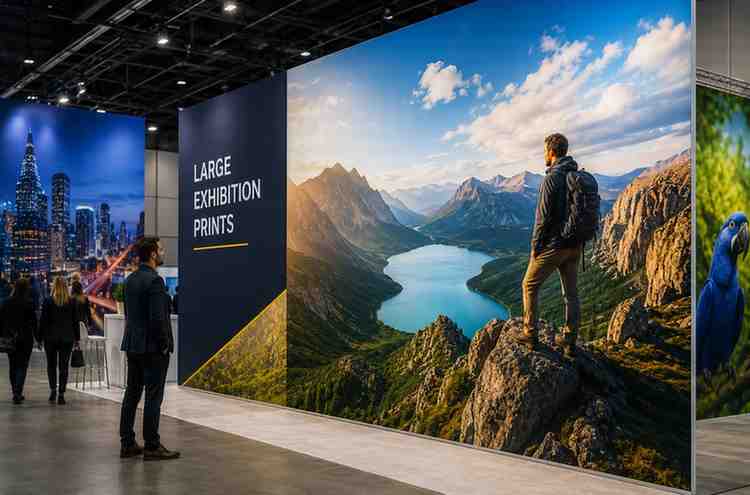
If you have ever walked into a gallery and stopped dead in your tracks in front of a photograph or painting that seemed almost alive, chances are you were looking at Large Exhibition Prints. Not just a big photo. Something more considered than that. Something made with deliberate care.
And yet, most artists and photographers who are just starting to show their work have no real idea what sets an exhibition print apart from something you pull out of a regular print shop. So let me walk you through it.
The Basics First: What Exactly Is a Large Exhibition Print?
A large exhibition print is a high-resolution, professionally produced print intended for public display, whether in a gallery, a museum, a corporate space, or an art fair. The emphasis is on scale, quality, and longevity.
We are typically talking about prints that start at A2 and go well beyond. Some go up to four or five feet wide. Some larger. The scale alone changes how a viewer experiences the image. Details that would disappear in a smaller format suddenly become present, almost textural.
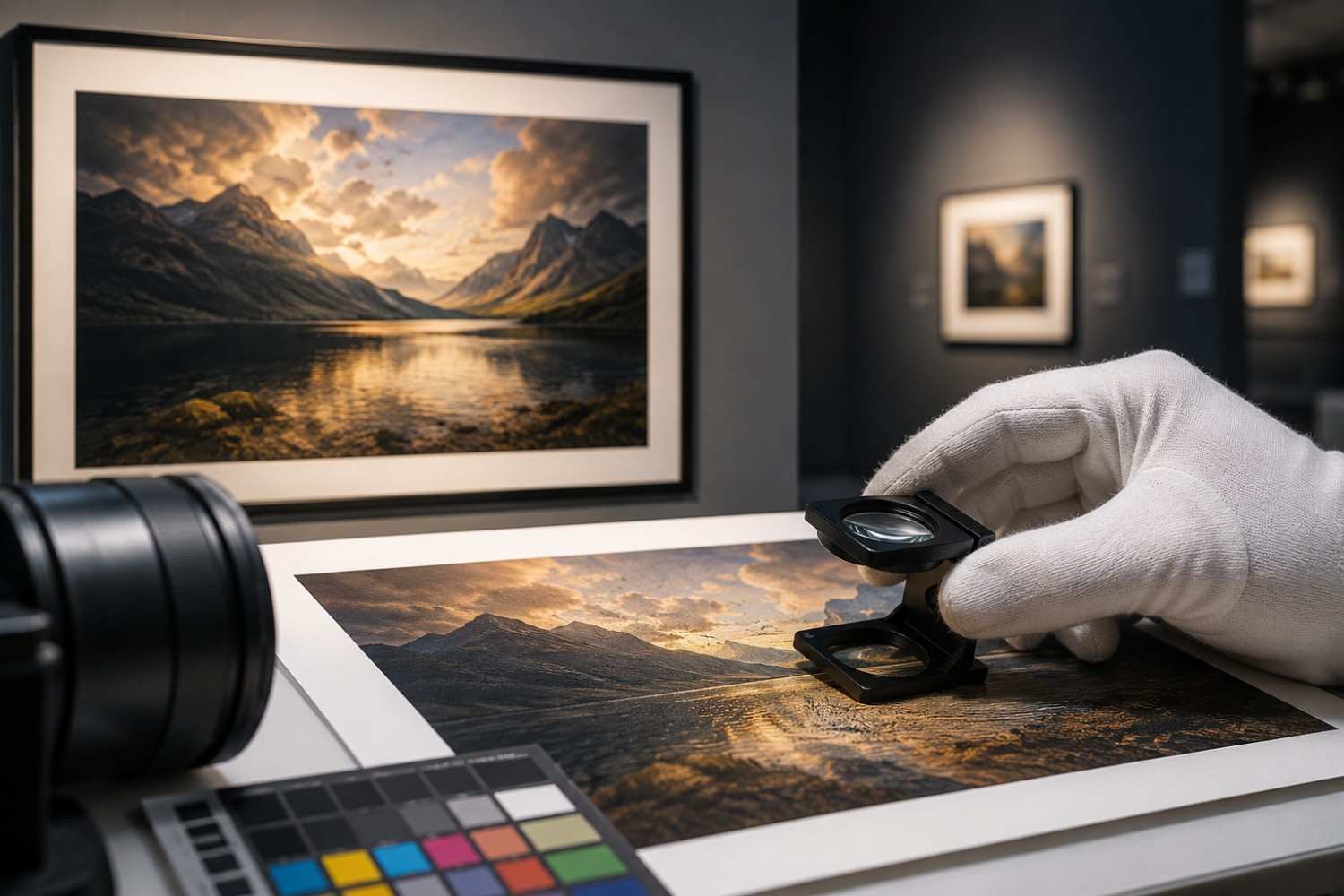
But size is only part of it. What really defines a large exhibition print is the precision behind it. The substrate, the ink, the colour profile, the resolution of the original file. All of it matters. Get one thing wrong and the print either looks flat, or it fades within a few years, or the colour is just slightly off from what you intended. A slightly wrong colour in a small print is forgivable. In a large exhibition print hanging at eye level, it is all anyone sees.
Why Do Artists and Photographers Choose Exhibition-Grade Printing?
Here is something I think gets overlooked. People often assume that exhibition printing is just for famous artists or established names. That is not really true anymore.
Today, a photographer showing their travel work at a small gallery in Bengaluru or Kolkata needs the same archival quality that a museum demands. Collectors who buy prints expect them to last. Interior designers sourcing art for luxury hospitality projects need prints that hold their colour and brilliance for decades, not years.
Must Read - What Is Pigment Printing for Artists?
Archival quality, when done right, means a print that survives fifty years or more without fading. That is not a marketing claim. That is the reality of what pigment-based inks on acid-free substrates can achieve when paired with the right printing process. This commitment to preservation is what distinguishes museum grade giclee printing from standard commercial output.
Ready to see what your work could look like at exhibition scale? Visit www.photostop.in to explore museum-grade large exhibition prints made for artists and photographers who refuse to settle.
What Goes Into Making a Large Exhibition Print?
This is where it gets interesting. A lot of people send a file to a lab and hope for the best. That is a bit like handing your manuscript to someone without telling them what the story is about.
A genuinely good large exhibition print starts long before the machine switches on.
File resolution and quality come first. For a print at 40 by 60 inches to look sharp, your source file needs to be large enough. A 72 dpi JPEG cropped from a social media post will not make it. You need a high-resolution original, ideally shot in RAW and exported at the highest possible quality.
Colour profiling and soft proofing matter enormously. The colours you see on your screen are rendered in RGB. Printers work in CMYK. The translation between the two is where colour can go wrong. A good fine art printing partner soft proofs your file before printing, which means they simulate on screen how the print will actually look. No surprises.
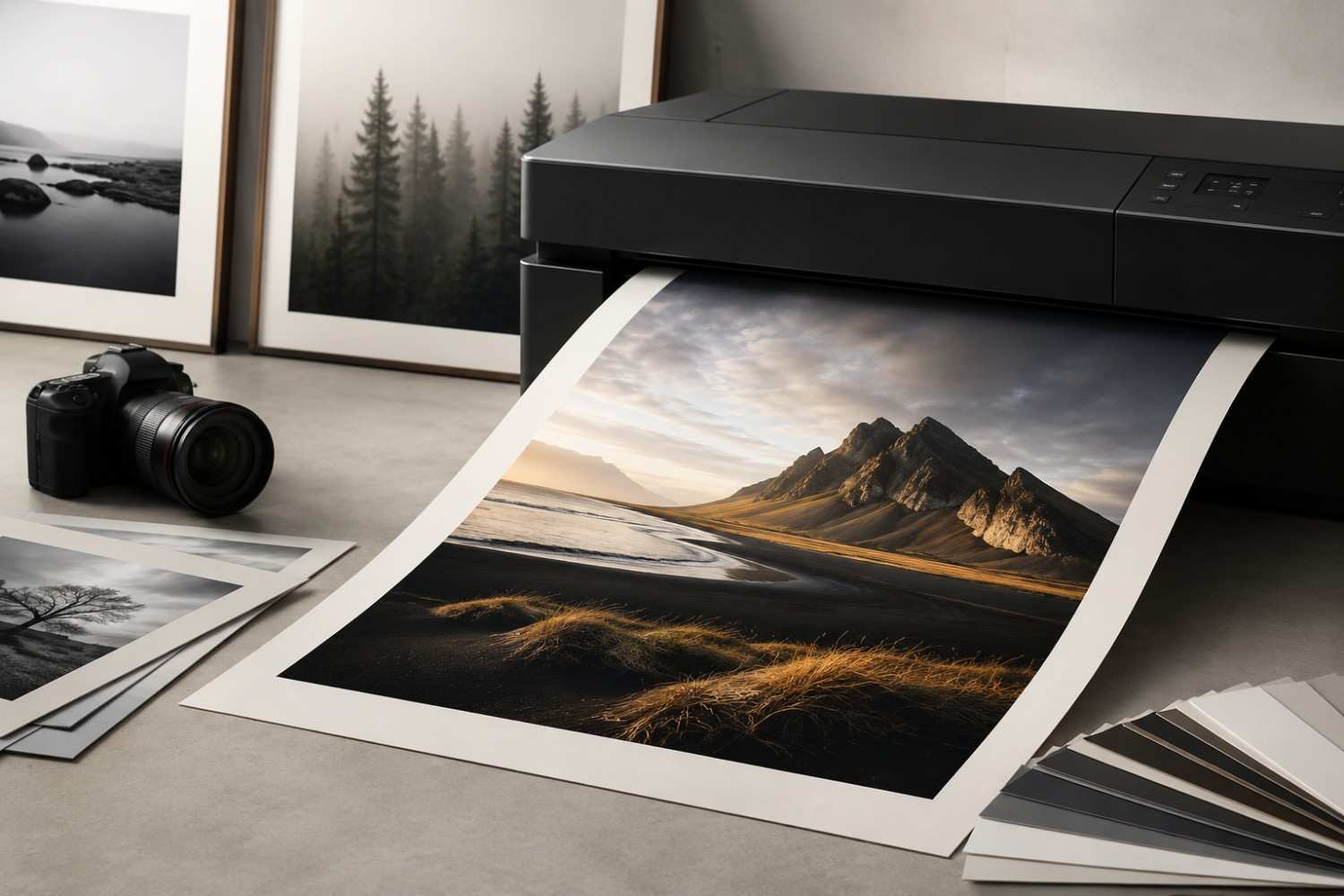
Substrate selection is something most beginners overlook entirely. Cotton rag paper, baryta, metallic, canvas, smooth fine art paper. Each surface changes the feel and tone of the image. A wildlife photograph often looks stunning on baryta. A watercolour reproduction might call for a textured cotton paper that mimics the original surface. There is no single right answer, which is why expert guidance matters.
Framing and finishing round it off. A large exhibition print without a frame is unfinished work. Deep-set frames, UV-protective glass, float mounting. These choices affect not just aesthetics but the long-term preservation of the piece.
Who Needs Large Exhibition Prints?
More people than you might think. Fine art photographers preparing for their first solo show. Painters wanting archival reproductions of original canvases to sell as limited editions. Architects and interior designers curating bespoke art for high-end residential and hospitality spaces. Even corporate offices investing in art that reflects their brand identity.
The common thread is that all of them need something that looks extraordinary and lasts. They also value high quality photo prints That accurately represent the original vision without compromising on detail or colour fidelity.
If you are planning a show, building a print-sales portfolio, or sourcing art for a space that deserves the best, talk to the team at Photostop. They will guide you through every decision, from file to frame.
A Few Things Worth Knowing Before You Order
Getting your first large exhibition print right does not have to be a stressful process. A few things to keep in mind:
Always start with the highest resolution file you have. If you are scanning original artwork, a high-end drum or flatbed scan is worth the investment.
Ask your printer for a proof before going to the final print. For large formats especially, a small proof print can save you from a costly mistake.
Think about where the print will hang. Natural light, artificial light, and humidity all affect how a print ages. Your printing partner can advise on the right substrate and finishing to suit the environment.
Consider limited editions. If you are selling prints as an artist, numbering and signing editions adds value and exclusivity.
The Thing Most People Get Wrong
They treat printing as the last step in the process. Something to handle quickly once the real creative work is done.
But for anyone serious about showing or selling their work, the print is the work. It is the physical form your art takes in the world. A poorly executed large exhibition print is not just a waste of money. It misrepresents everything you put into creating the original image or artwork.
That is why working with a specialist in fine art printing makes a real difference. Not just technically. Creatively too. Because when someone who truly understands the craft is involved, they help you make decisions you did not even know you needed to make. Specialists offering museum grade giclee printing services often provide this level of expertise and guidance.
About Photostop
Photostop is India's museum-grade fine art printing studio, trusted by photographers, artists, and designers who need precision, longevity, and expert guidance at every step. From high-end scanning and colour-accurate Large Exhibition Prints to framing and global shipping, Photostop handles it all under one roof.
Whether you are preparing for your first gallery show or fulfilling collector orders from across the world, Photostop ensures your work looks exactly as it should, and lasts well beyond a lifetime. Their dedication to producing high quality photo prints has made them a preferred choice among creative professionals.
Start your journey at www.photostop.in. Your work deserves nothing less.
Leave a Reply
Your email address will not be published. Required fields are marked *